Product Overview
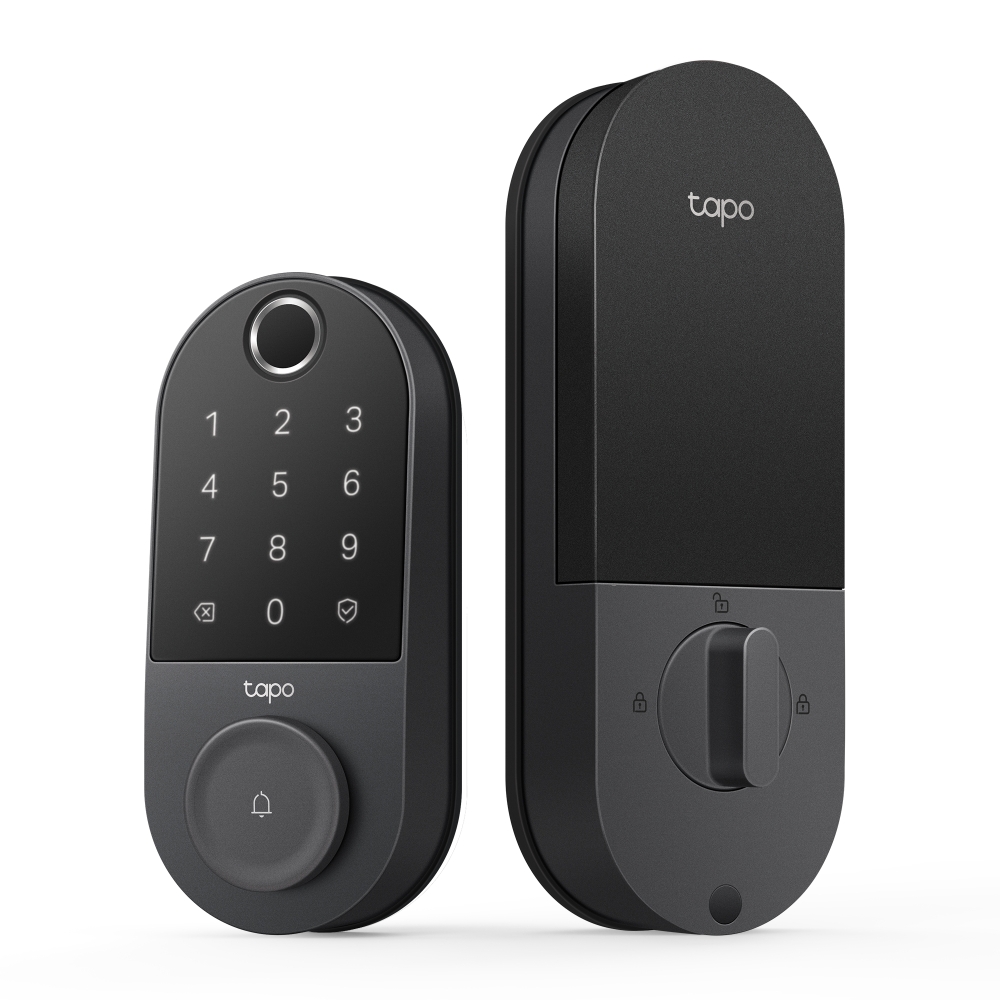
The Tapo DL110 is a smart deadbolt designed to provide several ways to unlock and monitor a residential door. It combines fingerprint recognition, keypad PIN entry, Bluetooth, Tapo app access, smart-home control, and backup physical keys in one battery-powered lock. The result is a flexible alternative to using a traditional key, although installation depends on the door’s existing measurements and deadbolt configuration.
This Tapo DL110 smart Wi-Fi door lock supports remote access through Wi-Fi, while Bluetooth provides a local connection option. Manufacturer documentation also lists automatic locking, activity logs, scheduled and one-time access codes, guest and resident management, failed-attempt alerts or lockout behavior, and a built-in doorbell function. Its exterior assembly has an IP65 weather-resistance rating, and the lock is certified as BHMA Grade 2.
The lock uses a rechargeable battery with USB-C charging. TP-Link describes battery operation of up to one year under stated usage conditions, but actual runtime can vary with Wi-Fi activity, temperature, access frequency, and settings. Multiple DL110 hardware revisions and regional variants exist, so buyers should confirm the documentation and included components for their exact version before installation.
Key Features and Specifications
Multiple entry methods
The DL110 supports six listed access methods: the Tapo app, fingerprint recognition, Bluetooth, keypad entry, compatible smart-assistant control, and included backup keys. This gives household members and guests different options depending on whether they prefer biometric access, a PIN, a phone, voice control, or a physical key. The manufacturer states that the fingerprint system can store up to 100 fingerprint IDs.
The keypad supports up to 200 access codes, including one-time codes. Codes can be used for residents, guests, or scheduled access, which may be useful when access needs to be temporary rather than permanent. The available code-management features should still be configured through the Tapo app and checked against the relevant hardware revision.
Connected controls and monitoring
Through Wi-Fi and Bluetooth, the DL110 can connect with the Tapo ecosystem. The lock uses 2.4 GHz 802.11b/g/n Wi-Fi, and manufacturer materials list compatibility with Amazon Alexa, Google Home, and Samsung SmartThings for smart-home integration and voice control.
The app-based functions include detailed activity logs, access management for guests and residents, and device settings. Automatic locking can help secure the door after it has been unlocked, while failed-attempt alerts or lockout behavior add another layer of awareness. The built-in doorbell function is an unusual part of the feature set, although the supplied data does not describe its sound options or notification behavior in detail.
Power and exterior design
The rechargeable battery uses USB-C charging, avoiding the need to treat the lock as a disposable-battery accessory. Manufacturer materials describe up to one year of operation under specified conditions, rather than guaranteeing a fixed runtime in every home. The exterior assembly is rated IP65 for weather resistance, and the lock includes an emergency-unlock function plus physical keys for backup entry.
How It Works
The DL110 replaces a compatible existing deadbolt with an exterior assembly, interior assembly, latch, battery pack, and mounting hardware. Before installation, the door must be checked against the manufacturer’s requirements, including a 60 mm or 70 mm backset, a 38 mm or 54 mm cross bore, a 25.4 mm door-hole diameter, door thickness between 35 and 55 mm, and latch-hole depth of at least 25.4 mm.
After the mechanical installation, setup involves connecting the lock to the Tapo app and configuring access methods. The user guide covers PIN-code creation, fingerprint registration, event logs, device sharing, and device settings. This lets an owner create resident or guest access and review recorded activity rather than relying only on a physical key.
Wi-Fi enables remote app access and connected smart-home features, while Bluetooth provides a nearby wireless connection. The keypad and fingerprint reader can be used directly at the door, and the backup keys provide a mechanical alternative. The rechargeable battery supplies power to the lock, with USB-C used for charging and an emergency-unlock function available if additional access is needed.
Automatic locking can be enabled for households that want the deadbolt to secure itself after an interval. One-time and scheduled codes allow access to be limited by purpose or time, although exact scheduling behavior may depend on the hardware revision, app version, and region. Users should follow the current guide for their specific DL110 version rather than assuming that every software option is identical.
Everyday Uses and Benefits
Everyday household entry
The Tapo DL110 can suit households that want to reduce dependence on keys. A resident may use a registered fingerprint, PIN, phone, Bluetooth connection, or compatible voice assistant, while physical keys remain available as a backup. Multiple access methods can also help when different household members have different preferences.
Guests and temporary access
The combination of up to 200 access codes and one-time-code functionality supports guest access without handing out a permanent key. Scheduled access and resident or guest management may be useful for family members, service providers, or other visitors who need entry only during defined periods. Owners should review activity logs and remove or change codes when access is no longer needed.
Rental and service access
The access-management tools could be useful in situations where several people need controlled entry to one property. A property owner or host may be able to create temporary credentials and monitor activity through the app, subject to the property’s Wi-Fi availability and the functions supported by the relevant DL110 revision. The product data does not establish that the lock is designed specifically for vacation rentals or commercial access control.
Connected smart homes
Compatibility with Amazon Alexa, Google Home, and Samsung SmartThings makes the DL110 a candidate for homes that already use one of those platforms. Remote app access and activity records can provide more visibility than a conventional deadbolt. However, the supplied information does not specify every supported automation, voice-command restriction, or integration requirement, so those details should be verified before purchase.
Exterior residential doors
The IP65 exterior rating and BHMA Grade 2 certification indicate that the lock is intended for a compatible residential exterior door. IP65 is a weather-resistance rating for the exterior assembly, not a statement that every part of the complete installation can be exposed without limitation. Correct door fit and installation remain essential.
What Makes It Different
The DL110’s main point of distinction is the breadth of access methods in a single deadbolt. Fingerprint recognition, a touchscreen-style keypad entry method as described in the product data, Bluetooth, Wi-Fi app access, smart-assistant integration, and physical keys give users several alternatives instead of requiring one particular unlocking routine. Its fingerprint capacity of up to 100 IDs and code capacity of up to 200 entries are also substantial for typical household access management.
The built-in doorbell function gives the lock another role beyond securing the deadbolt. Automatic locking, event logs, scheduled or one-time codes, and failed-attempt alerts or lockout behavior make it more than a basic keyless entry device. These features focus on managing and reviewing access rather than simply replacing a key.
The rechargeable USB-C battery is another practical characteristic, along with the manufacturer’s stated battery estimate of up to one year under specified conditions. IP65 exterior weather resistance and BHMA Grade 2 certification provide published durability and security classifications. These specifications should be understood as manufacturer-listed ratings, not as a substitute for checking the actual door, installation quality, or local environmental conditions.
The DL110 should not be evaluated solely by its feature count. Its usefulness depends on the door fitting the stated measurements, the wireless connection working reliably where the lock is installed, and the desired app or smart-home functions being supported by the exact regional and hardware version.
Setup and Practical Considerations
Check the door first
Measure the existing opening before purchasing or beginning installation. The manufacturer lists compatibility with 60 mm or 70 mm backsets, 38 mm or 54 mm cross bores, a 25.4 mm door-hole diameter, door thickness of 35–55 mm, and latch-hole depth of at least 25.4 mm. These requirements mean the DL110 is not automatically compatible with every existing deadbolt or door.
Install the hardware
The listed package includes exterior and interior lock assemblies, a Tapo A110 battery pack, USB charger, quick-start guide, mounting template, deadbolt, silicone cover, two keys, and mounting screws. Exact package contents can vary by region or hardware revision, so the box and current regional documentation should be treated as the final reference. The installation guide should be followed for alignment and mechanical operation.
Configure access
Once the lock is installed and mechanically tested, connect it to the Tapo app and configure the preferred access methods. The user guide covers PIN creation, fingerprint registration, event logs, device sharing, and device settings. Test each important method at the door, including the physical keys, before relying on the lock for everyday access.
Connect and maintain it
The DL110 uses 2.4 GHz 802.11b/g/n Wi-Fi along with Bluetooth. Confirm that the intended installation location has suitable wireless coverage for the app features you need, then charge the rechargeable battery through USB-C as required. Because TP-Link lists multiple hardware revisions and regional variants, check the official support page for the exact version, firmware guidance, and installation documentation.
Advantages
Flexible access
Fingerprint recognition, PIN entry, app control, Bluetooth, smart-assistant support, and physical keys give the DL110 a broad set of entry options. This flexibility can reduce the inconvenience of forgotten keys and lets owners provide different credentials to different people.
Useful access administration
Support for up to 200 access codes, including one-time codes, gives the lock more control than a single shared PIN. Scheduled access, guest and resident management, activity logs, and automatic locking can help an owner understand who has access and when the door is being secured.
Rechargeable power
The USB-C rechargeable battery avoids routine disposable-battery replacement. The manufacturer’s stated operation of up to one year under specified conditions may reduce charging frequency, although actual results depend on household usage and wireless conditions.
Smart-home compatibility
Support for Amazon Alexa, Google Home, and Samsung SmartThings may make the lock easier to incorporate into an existing connected home. The Wi-Fi connection also supports remote access through the Tapo app, while Bluetooth offers a nearby connection path.
Published ratings and backup options
An IP65 rating for the exterior assembly and BHMA Grade 2 certification provide useful published reference points. Emergency-unlock functionality and two included physical keys add alternatives if a preferred electronic access method is unavailable.
Limitations
Fit is not universal
The most important limitation is installation compatibility. The DL110 requires specific backset, cross-bore, hole-diameter, door-thickness, and latch-depth measurements. A buyer should verify all of them before purchase rather than assuming that a standard-looking deadbolt opening will be sufficient.
Battery life is an estimate
The advertised operation of up to one year is based on stated usage conditions. Wi-Fi activity, temperature, access frequency, and settings can change actual runtime, so owners should monitor the battery and keep the charging process and physical-key backup accessible.
Wireless dependence
Remote app access and connected smart-home functions require appropriate wireless connectivity and compatible software. The supplied data confirms 2.4 GHz 802.11b/g/n Wi-Fi and Bluetooth, but it does not specify every network, automation, voice-control, or notification requirement. A buyer should confirm those details for the intended setup.
Version and regional differences
TP-Link provides documentation for multiple DL110 hardware revisions, including V1, V1.60, and V2.60, as well as regional materials. Included components, app requirements, firmware behavior, and some electrical details may differ. The exact product label and regional support page should be checked before installation.
Limited independent evidence in this guide
No current price, availability, rating, review count, or discount is established here. Amazon-specific listing claims were not used because the supplied Amazon page was not retrieved directly, and no first-hand testing is being claimed.
Who Should Consider Buying It
The Tapo DL110 is best suited to homeowners or residents who want a smart deadbolt with several entry methods rather than a lock controlled only by a phone or a single PIN. It may be especially practical for households that value fingerprint access, temporary codes, activity logs, automatic locking, and compatibility with Amazon Alexa, Google Home, or Samsung SmartThings.
It can also fit users who want rechargeable USB-C power and a physical-key backup. The one-time and scheduled code features may appeal to households that need to provide temporary access without distributing a permanent key, although the exact workflow should be confirmed in the Tapo app and the relevant manual.
This product is less suitable for buyers who cannot verify their door measurements, lack appropriate wireless coverage for the desired connected features, or want a completely offline lock. It is also not possible to judge its current value against other products from the supplied data because no current price, independent rating, or verified review comparison is provided.
Installation should be approached as a measurement-dependent replacement project, not as a guaranteed drop-in upgrade.
Frequently Asked Questions
What is the Tapo DL110?
The Tapo DL110 is a battery-powered smart deadbolt with fingerprint recognition, keypad access, Bluetooth, Wi-Fi app control, smart-assistant integration, automatic locking, activity logs, backup keys, and a built-in doorbell function.
How many fingerprints and access codes can it store?
Manufacturer materials state support for up to 100 fingerprint IDs and up to 200 access codes. The lock also supports one-time-code functionality, with additional scheduling and access-management features listed by the manufacturer.
Does the DL110 work without a physical key?
It offers electronic entry through fingerprints, keypad codes, the Tapo app, Bluetooth, and supported smart-home controls. However, the product includes two physical backup keys and an emergency-unlock function, so owners should retain those alternatives.
What smart-home platforms are supported?
The manufacturer lists Amazon Alexa, Google Home, and Samsung SmartThings for smart-home integration and voice control. The supplied information does not describe every supported command or automation, so those details should be checked for the intended region and hardware revision.
How is the battery charged?
The DL110 uses a rechargeable battery and USB-C charging. TP-Link describes up to one year of operation under stated usage conditions, but actual runtime can vary with Wi-Fi use, temperature, access frequency, and settings.
Will it fit any standard door?
No. The listed requirements include a 60 mm or 70 mm backset, a 38 mm or 54 mm cross bore, a 25.4 mm door-hole diameter, a 35–55 mm door thickness, and latch-hole depth of at least 25.4 mm. Measurements should be verified before purchase.
Is the DL110 weather resistant?
The exterior assembly has an IP65 weather-resistance rating. This rating applies to the exterior assembly and does not remove the need for suitable installation or mean that every part of the complete lock can be exposed without limitation.
Does the lock record activity?
Yes. Manufacturer documentation lists detailed activity logs, along with guest and resident access management. The specific display and retention behavior should be confirmed in the current Tapo app and guide for the installed version.
Final Verdict
The Tapo DL110 is a feature-rich smart deadbolt centered on flexible access and connected management. Its strongest attributes are the combination of fingerprint recognition, up to 200 access codes, one-time and scheduled access, app and Bluetooth control, smart-assistant support, activity logs, automatic locking, rechargeable USB-C power, and physical-key backup.
The built-in doorbell and published IP65 and BHMA Grade 2 ratings add to its broad feature set.
The main decision point is not the number of functions but whether the lock fits the door and suits the home’s connectivity needs. Buyers should verify the required measurements, confirm the exact hardware revision and regional documentation, and treat the battery-life figure as an estimate. With those checks completed, the DL110 is a sensible candidate for users seeking a Tapo DL110 fingerprint door lock and smart deadbolt with several ways to grant and monitor access.
There is no verified current price, availability status, independent rating, or review count in the supplied research, so this guide does not make a value or reliability judgment based on those factors. The most grounded conclusion is that the DL110 offers an unusually broad access and monitoring feature set, while installation compatibility and version-specific details deserve careful attention before purchase.
Ready to check this product? Review the current listing and seller details before deciding.
Check on Amazon →
As an Amazon Associate, WorthPeeks earns from qualifying purchases.