Product Overview
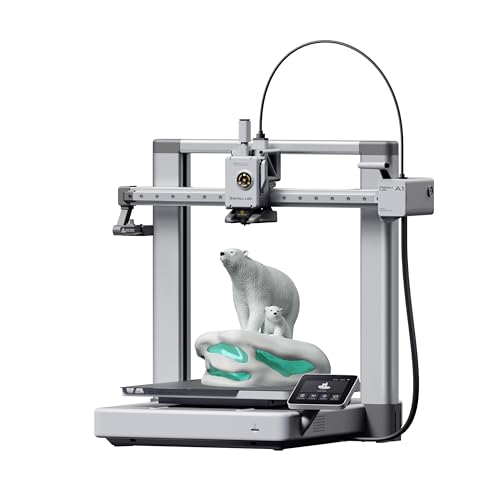
The Bambu Lab A1 is an open-frame FDM 3D printer identified with the supplied ASIN as model PF002-A, the printer-only A1 variant rather than the A1 Combo. It is designed around a 256 × 256 × 256 mm build volume, automated calibration functions, and support for widely used materials such as PLA, PETG, TPU, and PVA.
The A1 includes a 300°C all-metal hot end, a 100°C heated build plate, a 0.4 mm stainless-steel nozzle, filament monitoring functions, power-loss recovery, and optional cloud or local-network control. Its feature set makes it relevant to beginners, families, classrooms, hobbyists, and makers who want a relatively accessible FDM platform without claiming capabilities that the supplied research does not verify, such as current price, retailer package details, ratings, or print quality from hands-on testing.
Key Features and Specifications
Build volume and print hardware
The Bambu Lab A1 offers a 256 × 256 × 256 mm build volume. That gives users a defined cubic workspace for producing objects within those dimensions, although the practical size of a finished model can also depend on its shape, orientation, supports, and slicing settings.
The printer uses an all-metal hot end rated to a maximum temperature of 300°C. Its supplied nozzle is a 0.4 mm stainless-steel design, while Bambu Lab lists 0.2 mm, 0.6 mm, and 0.8 mm nozzle sizes as compatible options. The different sizes can provide choices for detail or throughput, but the research does not establish specific print-speed or resolution results for each nozzle.
Calibration and monitoring
Automatic calibration is a central part of the A1 feature set. Bambu Lab lists full-auto calibration and active flow-rate compensation, along with active motor-noise cancellation. The printer also has filament runout, filament odometry, filament-tangle, and power-loss recovery functions.
The A1 includes a low-frame-rate chamber-monitoring camera with up to 1080p resolution and supports timelapse recording. These features can help with remote visibility and documentation, but the supplied information does not verify live-monitoring performance, recording storage details, or the quality of completed timelapses.
Materials and platform
The printer includes a Bambu Textured PEI build plate and supports a maximum build-plate temperature of 100°C. Bambu Lab identifies PLA, PETG, TPU, and PVA as ideal supported filaments. ABS, ASA, PC, PA, PET, and carbon- or glass-fiber-reinforced polymers are listed as not recommended, rather than being described as categorically impossible to print.
How It Works
The A1 is an FDM, or fused deposition modeling, printer. In this process, filament is heated through the hot end and deposited layer by layer onto the build plate according to instructions generated by slicing software. The 256 mm cubed build volume defines the maximum stated working area in each dimension.
Before printing, the user selects a model, prepares it in compatible slicing software, chooses material and print settings, and sends the job to the printer. The A1’s automatic calibration, flow-rate compensation, and monitoring functions are intended to reduce some of the manual adjustment involved in preparing a print, but they do not eliminate the need to select suitable filament, maintain the machine, or position the printer appropriately.
The printer can connect through Bambu Cloud Service or operate in LAN-only mode. LAN-only operation provides a local-network option without requiring cloud connectivity for that mode. The supplied research does not specify every compatible software version, mobile-app function, network requirement, or account requirement, so those details should be checked in current documentation before purchase or setup.
During a job, filament sensors can identify conditions such as runout or tangling, while power-loss recovery is designed to help resume after an interruption. The camera can support low-frame-rate monitoring and timelapse recording. These are documented functions, not guarantees that every failed print will be prevented or recovered successfully.
Everyday Uses and Benefits
Beginner projects
The Bambu Lab A1 can suit people learning the basics of desktop 3D printing because it combines an open-frame design with automatic calibration features and a ready-to-use positioning in its product description. PLA support is particularly relevant for introductory models, organizers, decorative objects, and simple household projects. Beginners still need to learn bed preparation, filament handling, slicing, and safe operation.
Family and educational use
The product is described as a 3D printer for beginners and kids, making it potentially relevant to supervised family activities, school projects, and maker education. Its sensor and recovery features may make the workflow easier to manage, but the supplied data does not establish child-safety certifications, enclosure protection, noise measurements, or specific classroom policies.
Adult supervision and an appropriate installation area remain important considerations.
Functional hobby printing
The build volume supports a range of hobby projects, including models that fit within a 256 × 256 × 256 mm workspace. PETG can be useful for projects where a user chooses that material, while TPU provides an option for flexible filament applications. The available material guidance should be followed carefully, particularly because Bambu Lab lists several engineering and fiber-reinforced materials as not recommended.
Local-network workflows
Users who prefer not to rely on cloud connectivity can consider LAN-only mode, which provides a local-network connection option. This may be useful in a workshop, classroom, or home setup with local device management preferences. The research does not confirm detailed security settings, access controls, or the full range of features available when cloud services are not used.
What Makes It Different
Automated workflow features
The A1’s documented combination of full-auto calibration, active flow-rate compensation, active motor-noise cancellation, and a one-clip quick-swap nozzle design distinguishes its feature set within this product description. These functions focus on setup, consistency, operating noise, and maintenance convenience. The research does not support a broader claim that the printer is categorically easier or better than competing models.
Broad everyday filament support
Bambu Lab identifies PLA, PETG, TPU, and PVA as ideal materials for the A1. That gives the printer a useful range for common rigid, flexible, and support-material applications. At the same time, its official material guidance places clear limits on expectations by listing ABS, ASA, PC, PA, PET, and carbon- or glass-fiber-reinforced polymers as not recommended.
Printer-only configuration
The supplied ASIN is associated with the non-Combo A1 variant in retrieved third-party records. This matters because the standard AMS system is incompatible with the A1, and Bambu Lab states that the AMS lite is required for multi-color printing. The separate A1 Combo variant includes the AMS lite, while the printer-only configuration should not be described as including that multi-color accessory.
Recovery and connectivity options
Power-loss recovery, filament monitoring functions, a camera, cloud control, and LAN-only mode create several documented workflow options. These features may be meaningful to users who want monitoring or local connectivity, but the available research does not establish reliability rates, print-success percentages, or independent comparative testing.
Setup and Practical Considerations
What the printer-only package is documented to include
Bambu Lab’s A1 printer-only documentation lists the printer, purge wiper, spool holder, pre-installed stainless-steel nozzle, PTFE tube, build plate, accessory box, and a 20 g filament sample in a random color. The quick-start guide also lists setup and maintenance items such as Allen keys, an unclogging pin tool, a heatbed nozzle wiper, cable organizer, scraper blade, spare filament cutter, grease, oil, a supportive footpad, and assorted screws.
Because the exact included accessories for the supplied ASIN were inferred from official printer-only documentation rather than independently verified against the retailer package listing, buyers should confirm the current box contents before relying on any particular accessory being included.
Initial preparation
Place the open-frame printer on a suitable, stable surface with enough room for the machine and its moving components. The official listed dimensions are 385 × 410 × 430 mm, and the net weight is 8.3 kg, so the installation area should accommodate those stated physical measurements as well as access for filament and maintenance.
The initial process involves unpacking the printer, fitting or checking the documented components, installing filament, and following Bambu Lab’s quick-start instructions. Users should select a supported material and ensure that the build plate and nozzle are correctly installed before beginning a print. The supplied research does not verify an exact setup time.
Advantages
Practical strengths
The A1 combines a substantial 256 × 256 × 256 mm build volume with an all-metal hot end reaching up to 300°C and a heated build plate rated up to 100°C. Its 0.4 mm stainless-steel nozzle is supplied pre-installed, while compatible alternative nozzle sizes give users documented hardware choices for different printing priorities.
Automatic calibration can reduce the amount of manual adjustment expected from a user, particularly during initial setup or routine use. Active flow-rate compensation, filament monitoring, power-loss recovery, and filament-tangle detection add useful safeguards and status awareness to the printing process, although they cannot guarantee that every print will succeed.
The printer supports several common materials, including PLA, PETG, TPU, and PVA, giving it relevance for introductory models, household parts, flexible projects, and support-material workflows. Cloud Service and LAN-only control also provide a choice between remote service connectivity and a local-network approach.
A one-clip quick-swap nozzle design may simplify nozzle replacement compared with a more involved maintenance process. The included camera supports up to 1080p low-frame-rate chamber monitoring and timelapse recording, adding visibility that may be useful when the user is not standing beside the printer.
Limitations
Important constraints
The A1 has an open-frame design, so it is not presented in the supplied research as an enclosed printer. That may affect how users plan ventilation, supervision, workspace placement, and material selection. The available information does not provide operating-noise measurements, safety certifications, or child-use guidance beyond the product’s beginner-and-kids description.
Material compatibility requires careful attention. Bambu Lab lists PLA, PETG, TPU, and PVA as ideal, but identifies ABS, ASA, PC, PA, PET, and carbon- or glass-fiber-reinforced polymers as not recommended. This does not establish that those materials are categorically impossible to print, but it does mean the A1 should not be marketed as an unrestricted engineering-material printer.
The standard AMS system is incompatible with the A1. Multi-color printing requires the separate AMS lite system, and the supplied ASIN is identified as the printer-only configuration rather than the Combo package. The exact retailer package contents are not independently verified.
Bambu Lab documented a historical A1 heatbed-cable safety issue involving possible cable damage from excessive bending or external force. Bambu Lab states that printers sold after January 30, 2024 were not from the recalled batch and included fixes intended to mitigate the issue. Buyers should consult current manufacturer guidance for any device-specific safety checks.
Who Should Consider Buying It
The Bambu Lab A1 is best suited to beginners, hobbyists, families, and supervised educational users who want an FDM printer with automated calibration and support for common filaments. It is especially relevant for PLA, PETG, TPU, and PVA projects that fit within the 256 × 256 × 256 mm build volume.
It may also suit makers who value filament monitoring, power-loss recovery, local-network control, or a quick-swap nozzle design. The LAN-only mode can be relevant to users who prefer a local connection option rather than relying on cloud connectivity for that workflow.
The printer is less suitable for buyers specifically seeking an enclosed machine, unrestricted engineering-material support, or a printer-only package that provides multi-color printing out of the box. Multi-color use requires the separate AMS lite, and the standard AMS is incompatible. Buyers who need current price, stock, warranty, ratings, or retailer-specific package information should verify those details directly because they were not established in the supplied research.
Frequently Asked Questions
What type of printer is the Bambu Lab A1?
It is an open-frame FDM 3D printer. It deposits heated filament layer by layer and has a stated 256 × 256 × 256 mm build volume.
What materials does the A1 support?
Bambu Lab identifies PLA, PETG, TPU, and PVA as ideal supported filaments. ABS, ASA, PC, PA, PET, and carbon- or glass-fiber-reinforced polymers are listed as not recommended.
What nozzle comes with the printer?
The documented printer-only package includes a pre-installed 0.4 mm stainless-steel nozzle. Bambu Lab also lists 0.2 mm, 0.6 mm, and 0.8 mm nozzle sizes as compatible options.
Does the A1 include multi-color printing?
The supplied ASIN is identified as the printer-only A1 rather than the A1 Combo. Multi-color printing requires the separate AMS lite system, and the standard AMS is incompatible with the A1.
Can the A1 work without cloud connectivity?
Yes. Bambu Lab states that the A1 supports LAN-only mode, which provides a local-network connection option without requiring cloud connectivity for that mode. The exact feature set in LAN-only operation should be checked in current documentation.
Does the A1 recover after a power interruption?
Power-loss recovery is listed as one of the printer’s functions. This feature is intended to help resume a print after an interruption, but the supplied information does not guarantee successful recovery in every situation.
Is the A1 enclosed?
No enclosure is identified in the supplied product data; the A1 is described as an open-frame printer. Users should plan an appropriate, supervised installation area and follow current manufacturer safety guidance.
What is known about the included accessories?
Official printer-only documentation lists items including the build plate, spool holder, PTFE tube, pre-installed nozzle, purge wiper, accessory box, and a 20 g random-color filament sample. The exact ASIN package was not independently verified against a live retailer listing.
Was the A1 personally tested for this guide?
No. This guide uses the supplied manufacturer, manual, and retrieved product-record information. It does not claim first-hand testing, independent print-quality results, ratings, or review findings.
Final Verdict
The Bambu Lab A1 presents a clearly defined option for users seeking a beginner-friendly FDM 3D printer with a 256 × 256 × 256 mm build volume, automatic calibration, common-filament support, and practical monitoring and recovery functions. Its 300°C all-metal hot end, 100°C build plate, textured PEI platform, local-network mode, and quick-swap nozzle design give the printer a broad documented feature set.
The main qualifications are equally important: this supplied ASIN represents the printer-only configuration, not the A1 Combo; multi-color printing requires the separate AMS lite; and several engineering or fiber-reinforced materials are listed as not recommended. The open-frame design also means buyers should consider placement and supervision carefully.
Overall, the A1 is a sensible candidate for beginners, families, educators, and hobbyists focused on supported everyday filaments. A final purchase decision should confirm the current retailer package, availability, warranty, and price directly, since those ASIN-specific details were not verified in the supplied research.
Ready to check this product? Review the current listing and seller details before deciding.
Check on Amazon →
As an Amazon Associate, WorthPeeks earns from qualifying purchases.